Sofia (as well as my whole country Bulgaria) is blessed with tons of natural mineral water sources. In the area of Sofia there are around 50 of them. The water comes from very deep, which garantees that is ecologically clean. One differ 8 completely different mineral water sorts (depending on mineral ingredients). "Zentralni bani" ("Sofia Central Mineral Baths") are located down town and should not be missed. You can drink from the hot mineral water taps, or even better you bring an empty plastic bottle and fill it for later. You will see a lot of locals doing the same (in big bottles) as the mineral water has great healing effect too....

The building of the Sofia Central Mineral Baths (in yellow behind the fountain) has been refurbished for the last few years. Before this it was used as the city's public baths until 1986. Public baths have existed in Sofia at least as early as the 16th century. During his visit to Sofia in 1553–1555, Austrian traveller Hans Dernschwam noted the presence of one large bath and two smaller baths on either side of the city!

The building was designed in the Vienna Secession style, but contains also typically Bulgarian, Byzantine and Eastern Orthodox ornamental elements.

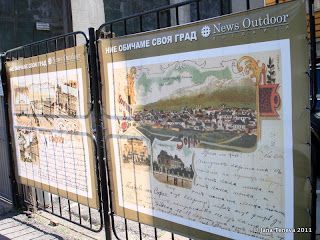
Next to Zentralni bani one may find several posters of old post cards from Sofia as a decoration hiding one building place:-)